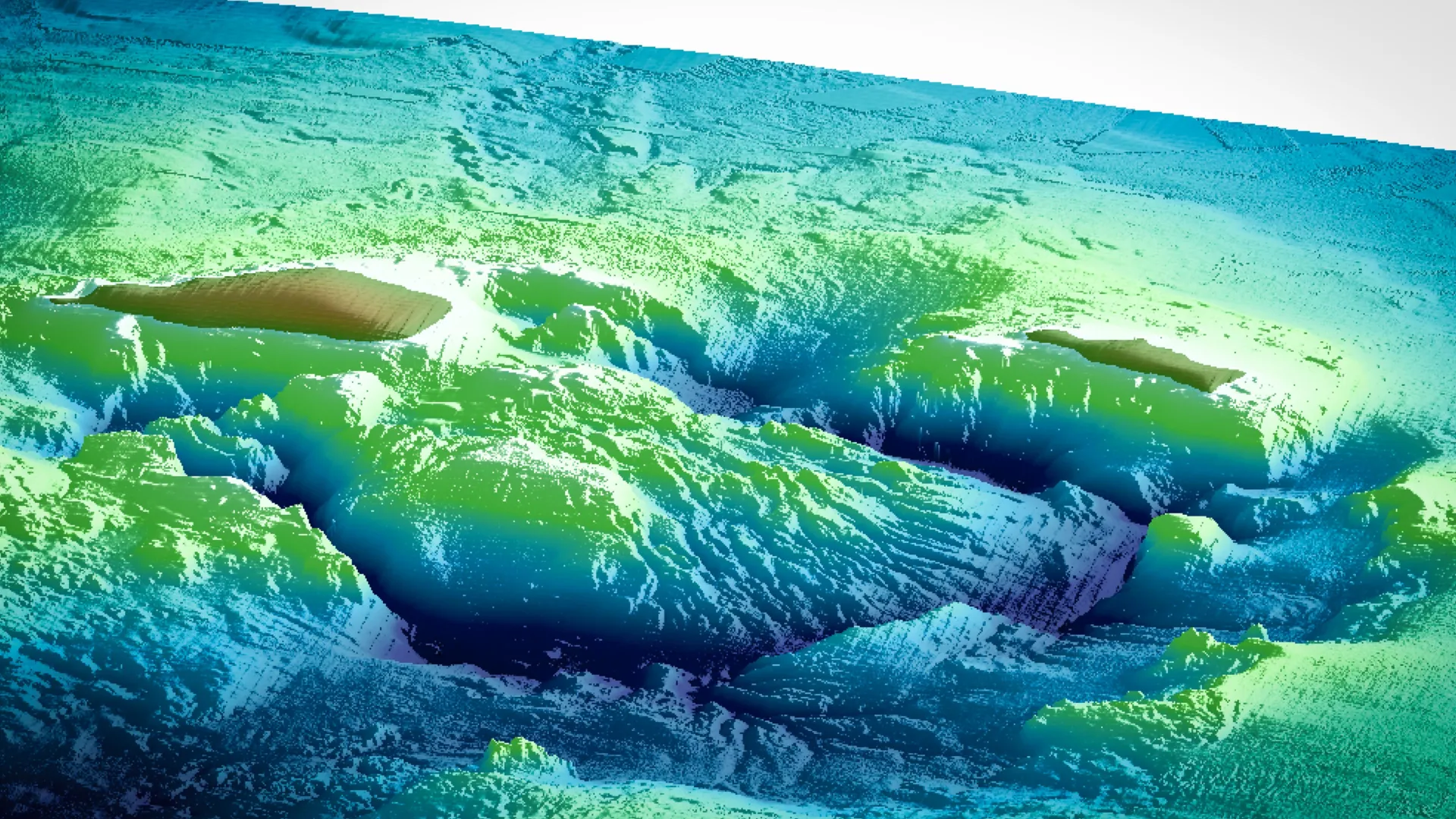
Scientists at Kobe University have found evidence that new molten rock is gradually accumulating beneath Japan's Kikai caldera, the undersea volcanic system that produced the largest known eruption of the Holocene roughly 7,300 years ago. The work, published in Communications Earth & Environment and reported by Science Daily, offers an unusually clear view of how a giant caldera rebuilds its magma supply long after a catastrophic blast.
The researchers stress that the finding does not indicate an eruption is coming. Rather, it describes a recharge process that unfolds over thousands of years.
Why it matters
Giant caldera volcanoes can erupt more than once, but scientists still do not fully understand how the enormous volumes of magma behind those events gather underground. That gap makes it hard to judge when a major eruption might occur.
"We must understand how such large quantities of magma can accumulate to understand how giant caldera eruptions occur," geophysicist Nobukazu Seama of Kobe University said, according to Science Daily.
The scale involved is difficult to picture. According to Science Daily, the magma released in such eruptions can be enough to cover all of New York City's Central Park under a layer about 12 kilometers (7.5 miles) deep. When that much material leaves a reservoir, the ground above can subside, forming a broad, shallow basin — a caldera. Yellowstone in the United States, Toba in Indonesia and Kikai are among the best-known examples.
Listening to the seafloor
Most of Kikai lies underwater, which might seem to complicate fieldwork. According to Science Daily, the setting actually helps: the open seafloor lets researchers run wide, systematic surveys across the whole volcanic structure.
"The underwater location allows us to implement systematic, large-scale surveys," Seama said.
Working with the Japan Agency for Marine-Earth Science and Technology (JAMSTEC), the Kobe team fired seismic pulses into the crust using airgun arrays and recorded the returning waves with ocean bottom seismometers. Because seismic waves behave differently in solid rock than in rock holding molten material, the recordings let the scientists map structures they cannot see directly.
The survey revealed a large body containing a high share of magma sitting right beneath the site of the ancient eruption. Its size, shape and position led the team to conclude it is the same storage system that fed that event.
"Due to its extent and location it is clear that this is in fact the same magma reservoir as in the previous eruption," Seama said, according to Science Daily.
Chemical clues point to a fresh supply
The more striking result concerns where the magma came from. Earlier work had shown a new lava dome building near the caldera's center over about the past 3,900 years — a mound that forms when thick, slow-moving lava piles up around a vent instead of spreading outward. Chemical analyses found that material from this dome and from other recent activity has a different composition from what Kikai released in its giant eruption.
That mismatch suggests the reservoir is not simply holding leftover magma from 7,300 years ago. Instead, molten rock appears to have arrived from deeper in the crust or mantle.
"This means that the magma that is now present in the magma reservoir under the lava dome is likely newly injected magma," Seama said.
Combining the seismic images with the chemical evidence gives researchers a working picture of how a huge volcanic system restocks itself after emptying. The team argues the same mechanism may explain why other giant calderas, Yellowstone and Toba among them, sit above sizable magma reservoirs relatively near the surface.
"This magma re-injection model is consistent with the existence of large shallow magma reservoirs beneath other giant calderas like Yellowstone and Toba," Seama said, according to Science Daily.
Next, the researchers aim to sharpen the seismic methods used at Kikai so they can trace how magma moves and where it is stored in finer detail.